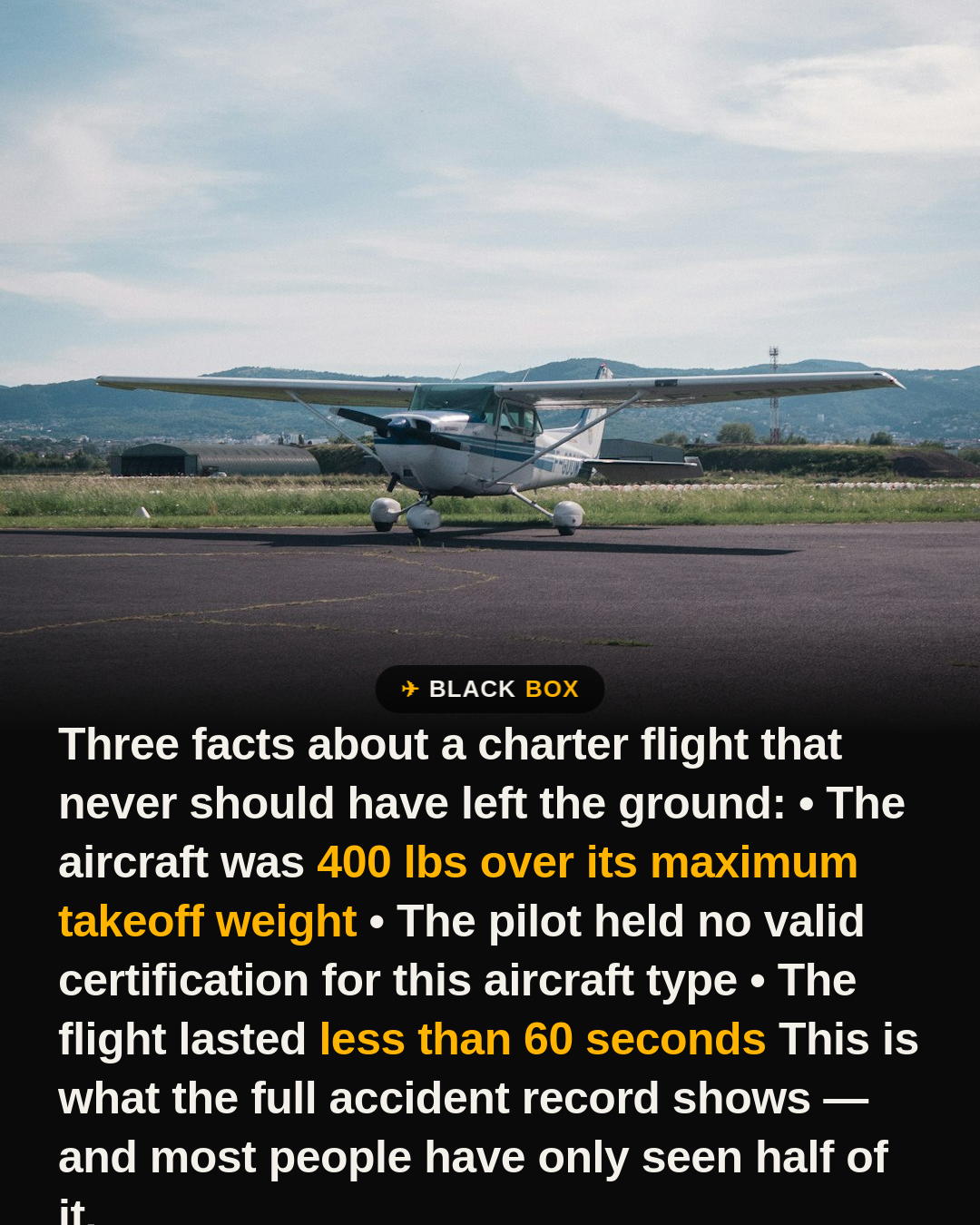
On the night of 25 August 2001, a Cessna 402 twin-engine piston aircraft departed a small airstrip in the Bahamas on a charter flight carrying eight occupants. It climbed to approximately 200 feet, rolled sharply to the left, and struck the ground beside the runway. All eight people on board died.
The aircraft was registered N8097W. The departure strip was Marsh Harbour Airport, a single-runway field on Great Abaco Island, runway length just over 4,000 feet. The destination was Opa-locka Executive Airport in Florida, roughly 180 nautical miles to the northwest.
What the accident record shows is a sequence of decisions that compounded before the wheels ever left the ground.
The pilot, Luis Morales III, held a commercial certificate but had logged fraudulent flight hours to obtain it, he did not meet the experience requirements to fly this aircraft type. A post-accident toxicology screen returned positive results for cocaine and alcohol. His blood alcohol content was measured above the FAA's legal threshold for flight operations, which sits at 0.04 percent, half the road driving limit in most US states.
The aircraft itself was loaded at roughly 400 pounds beyond its certified maximum takeoff weight. At that weight, the Cessna 402 loses meaningful climb performance. A twin-engine aircraft at max gross weight in warm, humid air needs every foot of runway and every knot of airspeed to establish a safe climb gradient. This aircraft had neither the pilot nor the performance margin to do it.
The investigation file, assigned FSI case number A0619836, runs to approximately 60 pages including appendices. The publicly circulated version cuts off at page 21, before the performance calculations and the full toxicology documentation are included.
Those missing pages matter. They show how the weight-and-balance figures were falsified on the manifest, and they walk through what the aircraft's actual climb rate would have been at the loaded weight given the conditions that night.
Aviation safety reporting exists precisely so that the complete picture stays on record, not just the summary, but the calculation behind it.
Does access to the full accident record change how you read a crash like this? Let us know below.